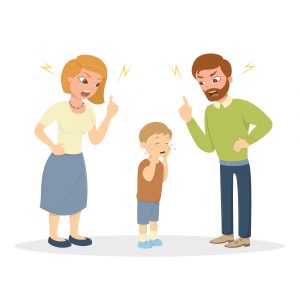
When you hear the word childhood trauma, what comes to your mind? Abuse? Domestic violence? Loss, grief, neglect?
Well, let me tell you, as a childhood trauma survivor myself, it is much more than that. Being a childhood trauma survivor means carrying effects on your body and mind that are difficult to fully comprehend, especially when you were a child just learning and growing, and your whole world suddenly revolved around surviving rather than thriving.
If you have ever felt like your reactions are “too much,” your emotions harder to manage than other people’s, or your relationships more complicated than they should be, there is a reason for that. And it very likely starts in childhood.
In this blog, we are going to talk about what childhood trauma actually is, what it looks like in adulthood, and what healing can look like for those of us who are still doing the work.
What Is Childhood Trauma?
Childhood trauma is not just the extreme, obvious things we see in movies. For a childhood trauma survivor, it can be any experience in childhood that overwhelmed their ability to cope. It leaves a lasting imprint on how they see themselves, others, and the world around them. It does not have to be dramatic to be real. Emotional neglect, growing up in a home with constant conflict, or simply never feeling safe or seen, these all count. The common thread is that the child’s nervous system got stuck in survival mode, and often, it stays there well into adulthood.
What are the 4 Types of Childhood Trauma?
1. Physical Abuse
Physical abuse involves any intentional physical harm caused to a child – hitting, slapping, burning, or any form of violence used as punishment or control. The damage is not just physical. Children who experience physical abuse often grow up associating love with fear, or believing that pain is a normal part of relationships. They may become hypervigilant, always watching for signs of danger, or they may normalise aggression in their own adult relationships without realising where that pattern came from.
2. Emotional Abuse and Neglect
Emotional abuse is one of the most common and least talked about forms of childhood trauma. It includes constant criticism, humiliation, being told you are worthless, having your feelings dismissed, or simply never being seen or heard as a child. Emotional neglect, where a parent is physically present but emotionally unavailable, falls here too. Children who grow up this way often become adults who struggle to trust their own feelings, who people-please compulsively, or who find it incredibly hard to believe they are enough just as they are.
3. Witnessing Domestic Violence or Conflict
A child does not have to be the direct target of abuse to be traumatised by it. Growing up in a home where there is constant fighting, violence between parents, or an atmosphere of fear and unpredictability is deeply traumatic. The child learns that the home, the one place they should feel safe, is not safe at all. This shapes their nervous system, their attachment style, and their ability to feel at ease in close relationships for years to come.
4. Loss, Grief, and Abandonment
Losing a parent, being abandoned, growing up with a parent who was emotionally or physically absent due to addiction, illness, or simply disinterest, these are all forms of childhood trauma. The grief of losing a parent early, or the quiet grief of having parents who were never really there, is something many survivors carry into adulthood without naming it. It often shows up as a deep fear of abandonment, difficulty letting people in, or an underlying sadness that is hard to explain.
Symptoms and Effects of Childhood Trauma in Adulthood
Childhood trauma does not stay in the past. It travels with you, quietly reactions, your relationships, your inner voice, and the way you move through the world. Here are some of the most common childhood trauma symptoms in adults.
1. Difficulty Regulating Emotions
Adults who grew up with trauma often find their emotions feel bigger or more overwhelming than those of people around them. Small frustrations can trigger intense anger. Mild disappointment can spiral into deep despair. This is not a character flaw, it is the result of a nervous system that was never taught how to self-regulate, because no one modelled it. When you grow up in chaos, your emotional thermostat gets calibrated to chaos. Resetting it takes time and deliberate work.
2. Hypervigilance and Anxiety
One of the most exhausting symptoms of childhood trauma in adults is hypervigilance, a constant, low-level (or sometimes high-level) state of alertness. Childhood trauma survivors often find themselves scanning rooms for danger, reading people’s faces for signs of anger or rejection, or bracing for things to go wrong even when everything is fine. This was a useful survival skill as a child. As an adult, it is draining, and it makes genuine relaxation feel almost impossible.
3. Low Self-Worth and Self-Blame
Many childhood trauma survivors grow up with a deeply internalised belief that they are not enough, or worse, that they are the problem. When a child is repeatedly criticised, ignored, or hurt by the people who were supposed to love them unconditionally, the child’s brain does not conclude “my parents are flawed.” It concludes “I must be the reason.” That self-blame gets carried into adulthood as chronic self-doubt, difficulty accepting love, and an inner critic that is far harsher than it needs to be.
4. Difficulty Trusting Others
Trust, for a childhood trauma survivor, is not something that comes naturally. When the people who were supposed to be your safe haven turned out to be the source of pain, your brain learns a very specific lesson: people are not safe. This shows up in adulthood as keeping people at arm’s length, sabotaging relationships when they feel too close, or oscillating between clinging to people and pushing them away. It is not that survivors do not want connection — it is that connection feels simultaneously necessary and terrifying.
Psychological Effects of Childhood Trauma
Beyond the day-to-day symptoms, childhood trauma can have deeper psychological effects that shape a person’s entire relationship with themselves.
1. PTSD and Complex PTSD (C-PTSD)
While PTSD is commonly associated with single traumatic events like accidents or disasters, childhood trauma survivors often develop Complex PTSD — a form that results from prolonged, repeated trauma, especially in early childhood. C-PTSD goes beyond flashbacks and nightmares. It includes a pervasive sense of shame, difficulty maintaining a stable sense of identity, intense emotional responses, and a deeply disrupted relationship with one’s own self. Many people live with C-PTSD for years without ever having a name for what they are experiencing.
2. Depression and Persistent Sadness
Research consistently shows that childhood trauma survivors are significantly more likely to experience depression in adulthood. This is not simply “being sad.” It is often a deep, persistent heaviness, a flatness to life, an inability to feel joy fully, a sense of being fundamentally different from other people. Some survivors describe it as mourning — mourning the childhood they never had, the parents they needed but did not get, and the version of themselves that might have existed without all of it.
3. Negative Core Beliefs About Self and the World
One of the most lasting psychological effects of childhood trauma is the formation of negative core beliefs, deeply held, often unconscious convictions like “I am unlovable,” “I am not safe,” “I do not deserve good things,” or “People will always leave.” These beliefs were formed as survival strategies in childhood, ways of making sense of a painful environment. But they run quietly in the background of adult life, influencing every decision, every relationship, and every moment of self-doubt, long after the original circumstances that created them are gone.
Childhood Trauma and Relationships
Perhaps nowhere does unhealed childhood trauma show up more clearly than in relationships, romantic, platonic, and professional.
1. Attachment Wounds and Relationship Patterns
The way we attach to our earliest caregivers becomes the blueprint for all our future relationships. Childhood trauma survivors often develop insecure attachment styles — anxious attachment, where they cling and fear abandonment, or avoidant attachment, where closeness feels threatening and they pull away. Some develop a disorganised attachment, oscillating between both. Understanding your attachment style is not about labelling yourself — it is about starting to see the patterns clearly, so you can begin to change them.
2. Attracting or Staying in Unhealthy Relationships
It is not uncommon for childhood trauma survivors to find themselves repeatedly drawn to relationships that echo the dynamics of their childhood, critical partners, emotionally unavailable people, relationships with an undercurrent of instability. This is not a personal failing. The familiar, even when painful, feels safe to a nervous system that grew up in pain. Healing means slowly expanding your definition of what feels normal — learning to stay when things are calm, and leave when things are genuinely harmful.
3. Struggling With Intimacy and Vulnerability
Letting someone truly know you requires a level of safety that many childhood trauma survivors have never fully experienced. Vulnerability, the foundation of genuine intimacy, feels dangerous when your early experiences taught you that being open led to hurt. Survivors often describe a glass wall feeling in relationships: wanting closeness, but unable to fully let it in. This is one of the most tender and important areas of healing work, and it rarely happens quickly.
What Unhealed Childhood Trauma Looks Like: A Survivor’s Perspective
Today, I was listening to a podcast where Ranveer Allahbadia was interviewing Prajakta Koli. Ranveer asked her how her childhood was, and she said it was normal, that she felt lucky to have had it. She went on to describe how she was treated with respect, corrected when wrong, appreciated when she did something good. She had a say in matters, was spoken to with dignity, and never feared facing her parents.
When I heard this, it felt like she was describing a parallel universe. Are these things really happening?
That is what unhealed childhood trauma looks like, when someone else’s ordinary feels completely foreign to you. When a safe, loving home sounds like a fairy tale rather than a baseline. That gap, between what you experienced and what was actually possible, is something survivors carry quietly for years.
What you see around you becomes your normal. And then you spend years fighting to change your environment, rewire your brain, and unlearn everything that was modelled for you by parents who were never ready to be parents in the first place.
You mourn the childhood you never got. And eventually, if you do the work, you learn to forgive them, not because what they did was okay, but because they genuinely did not know any better.
It has been 29 years of my life. I am still learning every day. And I will tell you honestly —it is not easy. The brain of a childhood trauma survivor does not function the same way as someone who had a safe childhood. You still long for what your friends have. You feel a quiet jealousy when you see children receiving easy, uncomplicated love from their parents.
But that, too, is part of it. And it is something you eventually have to accept, not as a defeat, but as the starting point.
Does Childhood Trauma Ever Go Away?
This is one of the most searched questions about childhood trauma, and it deserves an honest answer.
The Short Answer: It Does Not Disappear, But It Does Change
Childhood trauma does not simply go away with time. Waiting it out does not heal it. But, and this is important, it absolutely does change with the right work. The goal of healing is not to erase what happened. It is to reach a place where your past no longer controls your present. Where you can remember what happened without being hijacked by it. Where your triggers get smaller, your reactions become more proportionate, and you begin to build a life that feels genuinely yours.
Healing Is Not Linear
There is no straight road from trauma to healed. Healing from childhood trauma is messy, non-linear, and deeply personal. You will have weeks where you feel like a completely different person, and days where an old wound opens up as though no time has passed. Both are normal. The setbacks are not proof that you are failing, they are proof that you are a human being doing something genuinely difficult. The only thing that doesn’t work is doing nothing.
Healing From Childhood Trauma: A Survivor’s Guide to Starting
There are two roads available to childhood trauma survivors. One leads toward bitterness, emotional shutdown, and unconsciously passing pain on to others. The other, harder, longer, but far more worthwhile, leads toward healing, self-awareness, and a life that actually feels like yours.
1. Acknowledge That It Was Real
The first step is deceptively simple, but for many survivors it is the hardest: acknowledging that what happened to you was real, and that it affected you. Many survivors spend years minimising, “it wasn’t that bad,” “other people had it worse,” “I should just be over it by now.” None of that is true. Your experience was valid. Its effects on you are valid. And you deserve to take it seriously.
2. Seek Trauma-Informed Support
Healing from childhood trauma is genuinely difficult to do alone. A trauma-informed therapist, someone who understands how trauma works in the body and the nervous system, not just the mind, can make an enormous difference. Approaches like EMDR, somatic therapy, and IFS (Internal Family Systems) are particularly effective for childhood trauma. If therapy is not accessible right now, books, support groups, and trusted relationships can all be meaningful starting points.
3. Do the Work Every Single Day
Healing is not a destination you arrive at. It is something you choose, in small ways, every day. It is catching yourself mid-pattern and pausing. It is choosing not to react the way you were taught to. It is learning to sit with discomfort rather than run from it. It is the commitment I made to myself, to do the work every single day so that I do not pass on what was handed to me. So that my child grows up in the world Prajakta Koli described, where respect, love, and emotional safety are simply the baseline.
When you start doing this, something shifts. You begin to attract better friendships. Your relationships become safer. Gratitude finds its way into places it could not reach before. Not all at once, slowly, quietly, and then one day you notice it is there.
People with childhood trauma do not always chase big goals. More often, they just want to feel peaceful and happy from within. That is the case for me too. My dream is a simple one — a home filled with love and emotional safety. Not a big house or a particular salary. Just peace.
And I do not want to pass on the trauma I unconsciously learned to my child. That is what drives the work.
If, after reading this, you related even a little, I want you to know, I see you. I understand your pain. And I am really glad you are choosing to heal.
Frequently Asked Questions About Childhood Trauma
1. What Is a Childhood Trauma Survivor?
A childhood trauma survivor is anyone who experienced traumatic events during childhood such as abuse, neglect, loss, domestic violence, or emotional unavailability from caregivers, and is living with the effects of those experiences in adulthood. Being a survivor does not mean you are broken. It means you went through something difficult, and you are still here.
2. What Are the Most Common Symptoms of Childhood Trauma in Adults?
Common symptoms include hypervigilance, chronic anxiety, difficulty trusting others, low self-worth, persistent self-blame, trouble regulating emotions, and patterns of unhealthy relationships. Many survivors also experience depression, C-PTSD, or emotional numbness as long-term effects.
3. What Are the 4 Types of Childhood Trauma?
The four main types are physical abuse, emotional abuse and neglect, witnessing domestic violence or household conflict, and loss or abandonment. However, childhood trauma is broader than these categories. Anything that overwhelmed a child’s ability to cope and left a lasting impact on development can be considered traumatic, including bullying, medical trauma, and community violence.
4. Does Childhood Trauma Ever Fully Go Away?
Childhood trauma does not simply disappear with time, but it absolutely changes with the right support and work. The goal of healing is not to erase the past, but to reach a place where it no longer runs your present. With therapy, self-awareness, and consistent effort, most survivors find that their triggers reduce, their relationships improve, and their quality of life genuinely gets better.
5. How Does Childhood Trauma Affect Relationships?
Childhood trauma deeply affects the way we attach to and trust other people. Survivors often develop insecure attachment styles, either clinging to people out of fear of abandonment or pushing them away to avoid being hurt. Patterns of attracting unavailable or unhealthy partners are common, along with difficulty with vulnerability and genuine intimacy. Understanding these patterns is a key part of healing.
6. Can You Heal From Childhood Trauma Without Therapy?
Therapy, especially trauma-informed therapy, is the most effective route to healing, but it is not the only one. Many survivors begin their journey through books, journaling, supportive communities, and somatic practices like yoga and breathwork. That said, for deep or complex trauma, professional support is strongly recommended. You do not have to do this alone.
Conclusion: Every Childhood Trauma Survivor Chose the Harder, Better Road
Being a childhood trauma survivor is not a life sentence. It is a starting point.
The work is real. The grief is real. The days when old wounds feel fresh, those are real too. But so is the person you are becoming through all of it. Every time you choose awareness over autopilot, kindness over bitterness, healing over hiding — you are rewriting a story that was handed to you without your consent.
You did not choose the childhood you had. But you are choosing, every day, what you do with it. And that choice, quiet, unglamorous, and made over and over again, is one of the most courageous things a person can do.
If you are still in the middle of it, still figuring it out, still having hard days, that is okay. Healing does not require you to have it all figured out. It just requires you to keep going.
Just hold on.
If You Need Support
If this post resonated and you are going through a difficult time, please know that help is available. The iCall helpline (India) offers professional counselling support: 9152987821. You can also reach out to Vandrevala Foundation 24/7 helpline: 1860-2662-345. You do not have to carry this alone.
Also Read
- Is Your Self Worth Tied to Your Productivity? — how childhood experiences shape the way we measure our own value
- Signs You Were Raised by a Narcissist — understanding the specific dynamics of narcissistic parenting
- 10 Simple Daily Habits to Live a Better Life — small daily choices that support your healing journey