Let me be honest with you, I’ve read my share of self-help books that promised everything and delivered very little. The kind that makes you feel good while you’re reading them, but two weeks later, nothing has actually changed. You’re still the same person, with the same patterns, just with a slightly highlighted book on your shelf.
But every now and then, you pick up a book that stops you mid-page. One that makes you put it down for a minute because something just clicked. Those are the books on this list.
I’ve split this into two parts. The first five are books I’ve personally read and can genuinely vouch for, the ones that changed how I think, how I behave, or how I understand myself. The second five are books I’d confidently point you toward based on what I know about the genre and the people I’ve seen benefit from them.
No filler. No books I haven’t thought carefully about. If you’re looking for self-help books that actually work, start here.
Part One: Books I’ve Read and Can Vouch For
1. How to Do the Work by Dr. Nicole LePera
Best for: Anyone ready to begin inner work but not sure where to start
Dr Nicole LePera — widely known as The Holistic Psychologist- wrote this as a guide to understanding yourself: your patterns, your triggers, your nervous system, and the childhood conditioning that quietly runs so much of your adult behaviour. It doesn’t position you as broken. It positions you as someone who adapted to difficult circumstances and is now capable of choosing something different.
What I appreciated most is how the book connects the dots between things that can feel unrelated- the way you respond to conflict, the way you talk to yourself, the way your body holds stress- and shows how they all trace back to the same roots. Once you see that, the work becomes less overwhelming, because you’re no longer dealing with a hundred separate problems. You’re dealing with one pattern that shows up in different places.
This is the kind of book you read with a journal open beside you. Don’t rush it.
What it changed for me: How I understand my own reactions. I stopped asking “why do I always do this?” and started asking “what is this protecting me from?” That shift alone was worth the read.
Difficulty: Engaging and accessible. A strong starting point if this is newer territory for you.
2. Atomic Habits by James Clear
Best for: Anyone who knows what they want to change but can’t make it stick
This is the most practical book on this list, and probably the one I’ve recommended most to other people. James Clear’s argument is simple but genuinely useful: you don’t rise to the level of your goals, you fall to the level of your systems. Most of us try to change behaviour through willpower and motivation, both of which are unreliable. Habits work differently. They work because they become automatic.
Clear breaks down the science of how habits form, the cue, craving, response, and reward loop, and then gives you a clear framework for building new ones and breaking old ones. He calls it the Four Laws of Behaviour Change, and it’s one of those rare frameworks you’ll find yourself applying to things long after you’ve finished the book.
I picked this up during a period when I was trying to build a consistent writing and fitness routine, and it rewired how I thought about both. The insight that stuck with me most: every action you take is a vote for the kind of person you want to become. Identity-based habits, rather than outcome-based ones, are the ones that actually last.
What it changed for me: My entire approach to building habits, from outcome-focused to identity-focused. I stopped asking “how do I do this?” and started asking “who am I becoming by doing this?”
Difficulty: Very readable. One of those books you can get through quickly but will keep referencing.
3. The Power of Habit by Charles Duhigg
Best for: People who want to understand the science behind why habits are so hard to break
Where Atomic Habits gives you the practical playbook, The Power of Habit gives you the deeper understanding of why the playbook is necessary in the first place. Charles Duhigg is a Pulitzer Prize-winning journalist, and he writes about neuroscience the way a good journalist should, through stories. Real ones, about individuals, companies, and even social movements, all shaped by the same underlying habit loop.
The most useful thing this book does is explain that you can’t truly eliminate a habit, you can only replace it. The loop of cue, routine, and reward is hardwired. But the routine in the middle is changeable. Understanding that completely reframed how I thought about the habits I’d been trying unsuccessfully to drop for years. I wasn’t failing at willpower. I was just replacing the wrong part.
Read this alongside Atomic Habits if you want both the science and the system.
What it changed for me: I stopped blaming myself for “weak” willpower and started identifying the actual cues and rewards driving the habits I wanted to change. A much more useful angle.
Difficulty: Easy to read. The storytelling format makes the science feel approachable.
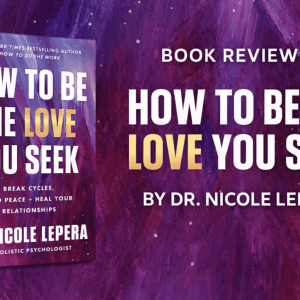
4. How to Be the Love You Seek by Dr. Nicole LePera
Best for: Anyone stuck in relationship patterns they can’t seem to break
Dr. LePera appears twice on this list because she earned it. Where How to Do the Work is about understanding yourself, this one is about understanding yourself in relation to others, specifically, why we tend to recreate the same relational dynamics over and over, even when we know better.
Her central argument is that we cannot build a genuinely healthy relationship with anyone else until we build one with ourselves. Don’t you agree? The book traces how our earliest relationships with caregivers create an emotional blueprint we carry into adulthood, and how that blueprint quietly drives who we’re attracted to, how we behave when we feel threatened, and why love can feel so complicated even when we want it to be simple.
I read this during a period when I was trying to understand some of my own relational patterns, and it gave me language for things I’d felt but couldn’t name. The journal prompts and exercises make it practical rather than purely theoretical, which is what separates a useful self-help book from one that just makes you feel understood without moving you forward.
I’ve written a full, detailed review of this one on Beaming Lines. Read it here.
What it changed for me: I stopped looking outward for what was missing in my relationships and started looking inward. Harder, slower, but far more useful.
Difficulty: Moderately challenging. Best read one chapter at a time, not all at once.
5. How to Win Friends and Influence People by Dale Carnegie
Best for: Anyone who wants to communicate better, lead more effectively, or simply understand people
This book was first published in 1936, and the fact that it still reads as relevant says everything. Carnegie’s core insight is that human nature hasn’t changed: people want to feel heard, valued, and important. Most of our failures in communication come not from a lack of intelligence but from a lack of genuine interest in the other person.
The principles in this book are simple, things like listening more than you talk, remembering people’s names, letting others feel the idea was theirs, giving honest appreciation rather than hollow flattery. None of it is complicated. What makes the book worth reading is that Carnegie illustrates each principle so vividly that you actually remember to apply it.
I came to this one through my work in marketing, but it’s reshaped how I show up in conversations generally. There’s a reason it has never gone out of print.
What it changed for me: How I listen. I became significantly more interested in understanding what the other person actually wants before saying what I want to say. That one shift changes almost every conversation for the better.
Difficulty: Light, fast, and surprisingly timeless. Easy to read on a weekend.
Part Two: Also Worth Your Time
These are the best books for healing and growth that I’d recommend based on what I know about the genre, also are there in my reading list. These books that come up consistently in therapy circles, reading communities, and among people doing serious inner work. I haven’t written full personal reviews of these, but they are well worth your attention depending on what you’re working through.
6. The Body Keeps the Score by Bessel van der Kolk
The definitive book on trauma and the body. Van der Kolk explains, with research and compassion, why trauma can’t always be talked away — because it lives in the nervous system, not just the memory. If you’ve ever wondered why your body reacts the way it does to stress or certain situations, this book will answer that question clearly. Dense in places, but worth every page.
Best for: Anyone trying to understand the physical dimension of trauma.
7. Set Boundaries, Find Peace by Nedra Tawwab
Therapist Nedra Tawwab makes boundary-setting feel less like a confrontation and more like an act of self-respect. She covers boundaries in every kind of relationship — family, work, friendships, romantic partnerships — and gives concrete, real-world language for conversations most of us avoid. If you’ve ever said yes when you meant no and then quietly resented it, start here.
Best for: Chronic people-pleasers and anyone who struggles to ask for what they actually need.
8. Adult Children of Emotionally Immature Parents by Lindsay C. Gibson
This book names something a lot of people have lived but never had words for: growing up with parents who couldn’t meet emotional needs, not necessarily through cruelty, but through unavailability, self-centredness, or unpredictability. If you grew up feeling unseen, or like you were responsible for managing everyone else’s feelings, this book will feel startlingly specific.
Best for: Anyone exploring where their people-pleasing or self-worth issues actually began.
9. The Gifts of Imperfection by Brené Brown
Brown’s research on shame and vulnerability is some of the most useful work in the self-help space. This book makes the case that wholehearted living — the kind most of us actually want — requires letting go of who you think you should be. For perfectionists and high-achievers especially, that’s not a small ask. She earns the argument.
Best for: Anyone whose sense of worth is tied to achievement, productivity, or other people’s opinions.
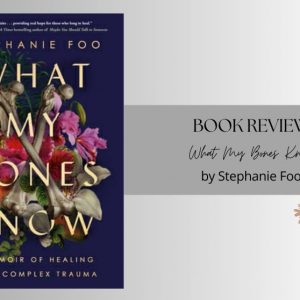
10. What My Bones Know by Stephanie Foo
A journalist investigates her own Complex PTSD diagnosis after a childhood shaped by abuse and abandonment. What makes this memoir stand out is its honesty — Foo doesn’t rush to a tidy resolution or smooth over the difficult parts. She shows healing as it actually is: slow, non-linear, and worth doing anyway. I’ve written a full review of this one on Beaming Lines. Read it here.
Best for: Anyone who wants to understand complex trauma from the inside out.
Frequently Asked Questions About Self-Help Books
1. What makes a self-help book actually worth reading?
The best self-help books are grounded in something real, either research, lived experience, or both, and they trust the reader to handle complexity. They don’t just diagnose the problem and leave you feeling worse; they offer a way forward. The books that tend to stick are also the ones you can return to at different stages of life and find something new in, because you’ve changed enough to see them differently.
2. Which self-help books are best for healing from trauma?
The Body Keeps the Score and What My Bones Know are both strong starting points. Complex PTSD: From Surviving to Thriving by Pete Walker is also worth looking into, particularly for those with difficult childhood environments. All three take trauma seriously without sensationalising it, and all three go beyond the mind to address the body’s role in healing.
3. Are self-help books effective, or just feel-good fluff?
Both versions exist in the genre. The difference usually comes down to how grounded the book is. Books backed by psychology or the author’s genuine lived experience tend to produce more than a temporary mood lift. The ones on this list earned their place by actually shifting something — in my thinking, my habits, or my understanding of myself. That’s the only real measure of whether a book worked.
4. What self-help books are good for people-pleasers?
Set Boundaries, Find Peace by Nedra Tawwab is the most directly practical. Adult Children of Emotionally Immature Parents by Lindsay Gibson goes deeper into where the pattern originates. And How to Do the Work by Dr. LePera addresses the internal belief systems that keep people-pleasing in place. Together, they give you the why, the what, and the how.
5. What are the best books for building self-worth?
The Gifts of Imperfection by Brené Brown is a strong starting point, especially for high-achievers. How to Be the Love You Seek addresses self-worth through the lens of relationships and childhood conditioning. And if you want something shorter to begin with, the Beaming Lines post on self-worth and productivity covers a lot of this ground in one read.
6. How do I apply what I read in self-help books to real life?
The gap between reading and applying is real, and most people underestimate it. A few things that help: reading slowly rather than rushing to finish, keeping a journal alongside the book to write your own responses, actually doing the exercises when a book includes them instead of skipping them, and giving yourself time between chapters to sit with an idea before moving on. You’ll get more from one book read deeply than ten books read quickly.
7. What self-help books are recommended by therapists?
The Body Keeps the Score, Set Boundaries, Find Peace, and Adult Children of Emotionally Immature Parents come up frequently as therapist recommendations. How to Do the Work and How to Be the Love You Seek are increasingly referenced too. That said, a therapist’s recommendation is most useful when it’s tailored to what you’re specifically working through — so treat this list as a starting point.
8. How many self-help books should I read at once?
One at a time, genuinely. This genre — particularly the trauma and psychology-adjacent titles — is not designed for high-volume consumption. Reading three at once usually means skimming all three rather than absorbing any one of them. More importantly, these books often surface things that need time and space to process. Finish one. Sit with it for a week. Then decide if you’re ready for the next.
A Final Word
The books in Part One changed something specific in me, how I build habits, how I understand my patterns, how I show up in conversations. The ones in Part Two come from a place of genuine respect for what they offer, even if I haven’t written full personal accounts of them.
None of these books will do the work for you. But the right one, at the right moment, can make the work feel possible. That’s enough of a reason to pick one up.
If this was useful, you might also enjoy: